REVIEW · QUEENSTOWN
Queenstown: Sunrise Glacier Scenic Flight
Book on GetYourGuide →Operated by Glenorchy Air · Bookable on GetYourGuide
Sunrise really can change how you see mountains. This fixed-wing sunrise flight is built for that first crack of light and a view that feels quiet enough to hear your camera click.
I love that the timing isn’t generic. The flight is designed around the sunbreak behind Mt. Aspiring, with the route set up to show glaciers and ice formations in a new way. The experience also includes a guaranteed window seat and a small group size, which matters when you’re trying to line up photos before the light moves on.
One consideration: this is a sunrise flight. That means early morning energy, a colder start in winter conditions, and a schedule that depends on the day’s first light.
In This Review
- Key things I’d underline before you book
- Why this sunrise flight feels special in Queenstown
- The sunbreak plan: Mt. Aspiring first light, then ice formations
- What you actually get time-wise (and why 2 hours can be enough)
- Inside the flight loop: from Mt. Aspiring up high and around
- The glacier trio: Passchendaele, Bonar, and Olivine from above
- Passchendaele Icefall
- Bonar Glacier
- Olivine Ice Plateau
- Mt. Aspiring National Park views: Barrier Range and the Arawhata River head
- The calm factor: why sunrise flights can feel different
- Price and value: is $298 worth it?
- Who should book this (and who might skip)
- Should you book the Queenstown Sunrise Glacier Scenic Flight?
- FAQ
- FAQ
- How long is the Queenstown Sunrise Glacier Scenic Flight?
- Where do I meet for the flight?
- Is there a landing during the flight?
- Will I have a window seat?
- What group size is this flight limited to?
- What is included besides the scenic flight?
- Is there a tour guide, and what language do they speak?
Key things I’d underline before you book
- New Zealand’s only fixed-wing Sunrise Scenic Flight designed specifically for sunrise viewing
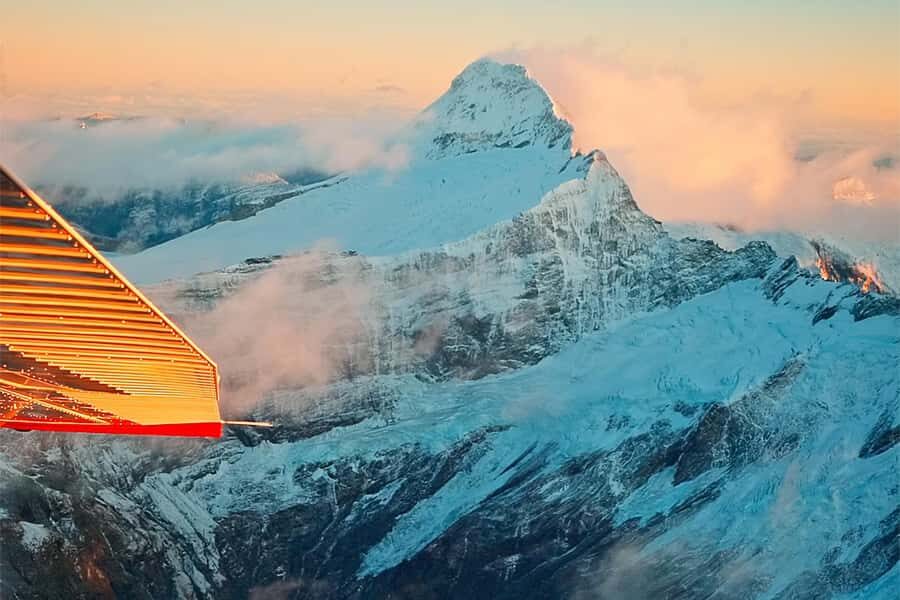
- Sunbreak timing behind Mt. Aspiring, giving you early light from the right direction
- Small group (limited to 9) and a guaranteed window seat for better viewing
- Glacier-focused views including Passchendaele Icefall, Bonar Glacier, and Olivine Ice Plateau
- No landing scenic flight with 1 hour 15 minutes in the air above frozen scenery
Why this sunrise flight feels special in Queenstown
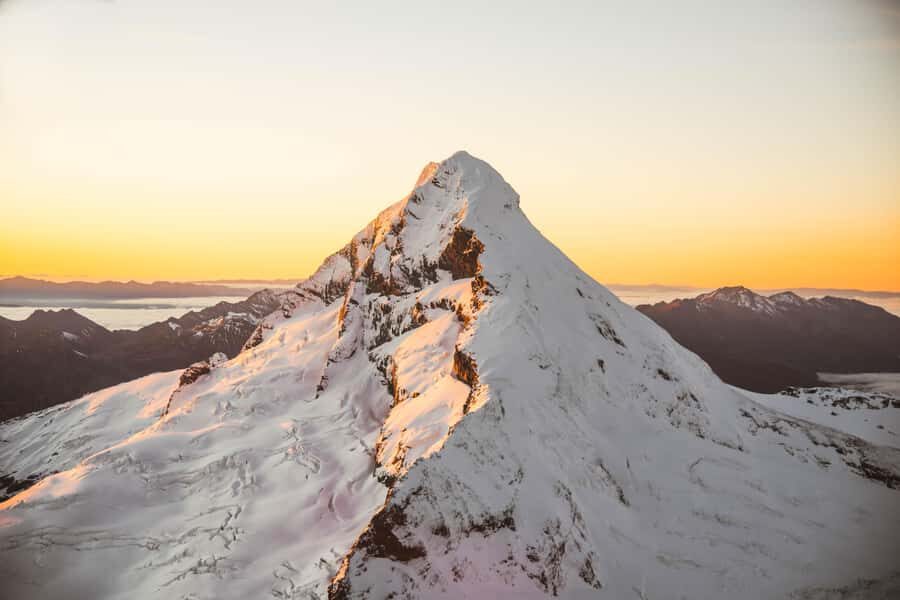
Queenstown has plenty of ways to see the Southern Alps, but sunrise is the part most trips don’t nail. This one is made for the hour when the world is half-dark, then suddenly not. The goal is simple: get up close to that moment when light hits the peaks from behind Mt. Aspiring, not after the day has fully warmed up.
What you’re really paying for is the combination of route planning and timing. The flight follows a scenic path around Mt. Aspiring (with no landing), so you’re not losing time on ground transfers or stopping and starting. You get a focused aerial loop designed for views you can’t replicate from town.
I also like the practical touches. Glenorchy Air includes round-trip scenic flying from Queenstown and validates parking at Queenstown Airport, which removes one of the annoying add-ons that can quietly inflate the cost of a quick morning experience.
The vibe is small and calm. With a group capped at 9, you’re less likely to be squeezed between strangers during the short, bright window when everything looks its best.
Other Queenstown tours we've reviewed in Queenstown
The sunbreak plan: Mt. Aspiring first light, then ice formations
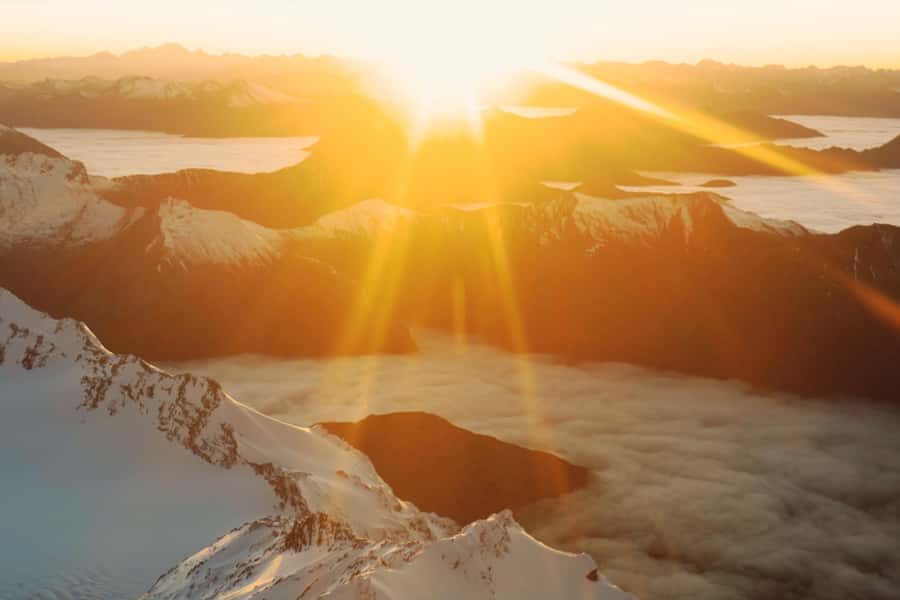
This flight’s biggest “why” is the sunbreak behind Mt. Aspiring. The mountain is New Zealand’s highest outside the Aoraki/Mount Cook region, so it’s not just a scenic name-drop—it’s a landmark that helps shape the lighting and the angles you’ll see from above.
The company’s approach is to fly the right track early, then let the light do the work. As the sun rises, frozen features start to show texture: crevasses, ice edges, and the way glacier surfaces catch light differently than rock.
Then you move into the glacier portion of the view. You’re set up to spot the Passchendaele Icefall, the Bonar Glacier, and the Olivine Ice Plateau. Even if you’re not a glacier nerd, you’ll feel it when you see how the terrain changes—icefall looks chaotic in shape compared to smoother plateaus, and it reads differently once the shadows shrink.
What you actually get time-wise (and why 2 hours can be enough)
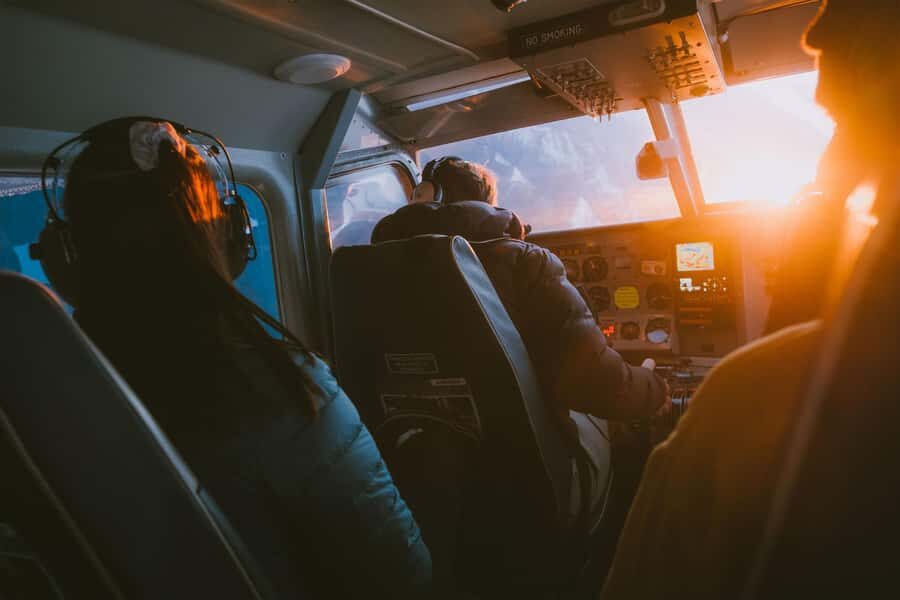
The total experience is 2 hours, with 1 hour 15 minutes in the air. That split is important. It means you’re not doing an all-day production to squeeze in a “quick” flight. You can usually still keep the rest of your morning for coffee or breakfast after you land.
You also have the confidence factor of a guaranteed window seat. Sunrise viewing is time-sensitive, and a window seat is one of those small things that turns into a big deal fast. When you can look out instantly—no swapping seats, no craning over someone’s shoulder—you’ll actually enjoy the views instead of fighting for them.
This is a live, English-speaking tour guide onboard. That matters because sunrise flights aren’t just sightseeing; the guide helps you make sense of what you’re seeing as the light changes. Even short context can help you notice details like the way a range sits behind another, or why one glacier looks steeper from your angle.
Inside the flight loop: from Mt. Aspiring up high and around
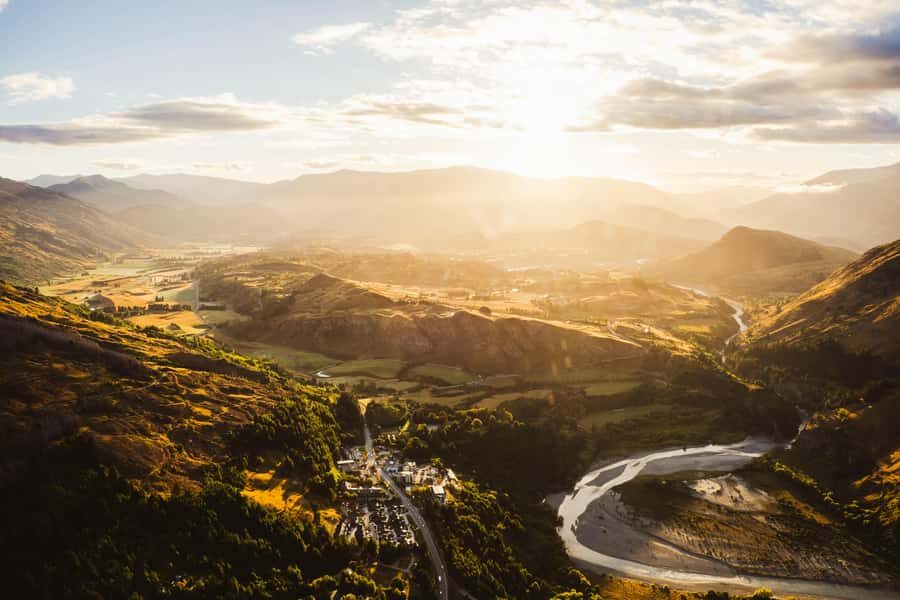
You start from Queenstown and head around Mt. Aspiring at sunrise. The flight is a round trip scenic flight, and the key detail is that there’s no landing. That might sound limiting, but it’s actually part of the value. No landing means the route stays efficient, and the time you spend is dedicated to viewing.
From the air, you’ll be flying above places that are described as frozen in time—terrain that still resembles what it looked like 15,000 years ago. You don’t need a science degree to understand why that statement sticks. When you look at the scale of glacial ice and the structure of valleys and ridges, it’s hard not to think about how long this took to form.
Expect a flight that feels steady rather than rushed. This is helped by the small-group size (limited to 9). Fewer people typically means fewer distractions and easier listening if you want to catch guide notes over the plane’s sound.
The glacier trio: Passchendaele, Bonar, and Olivine from above
This is the heart of the scenic story. The flight is set up to show three major glacier/ice features in different “moods,” which is exactly what you want from a sunrise viewing.
A few more Queenstown tours and experiences worth a look
Passchendaele Icefall
An icefall usually looks messier than a glacier tongue—more broken shapes, more variation. In sunrise light, those contrasts pop. You’ll get a sense of motion even though everything is frozen, because the shadows help define the uneven edges.
Bonar Glacier
Bonar Glacier is the one that helps your brain connect what you’re seeing. A glacier that’s easier to read than an icefall gives you a clearer mental map of how ice fills and shapes valleys. The first light tends to flatten highlights and deepen lines, which makes the glacier’s structure easier to follow from above.
Olivine Ice Plateau
A plateau is different. It tends to look broader and more uniform, and that uniformity makes it striking when the sun comes in. Where an icefall looks dramatic and fractured, the plateau can look almost graphic—sharp tonal boundaries and a clearer “surface” reading.
If you care about photos, this glacier trio is a smart route choice. It gives you variety without changing the whole trip. You stay on one flight plan, but you see multiple types of ice terrain as the day begins.
Mt. Aspiring National Park views: Barrier Range and the Arawhata River head
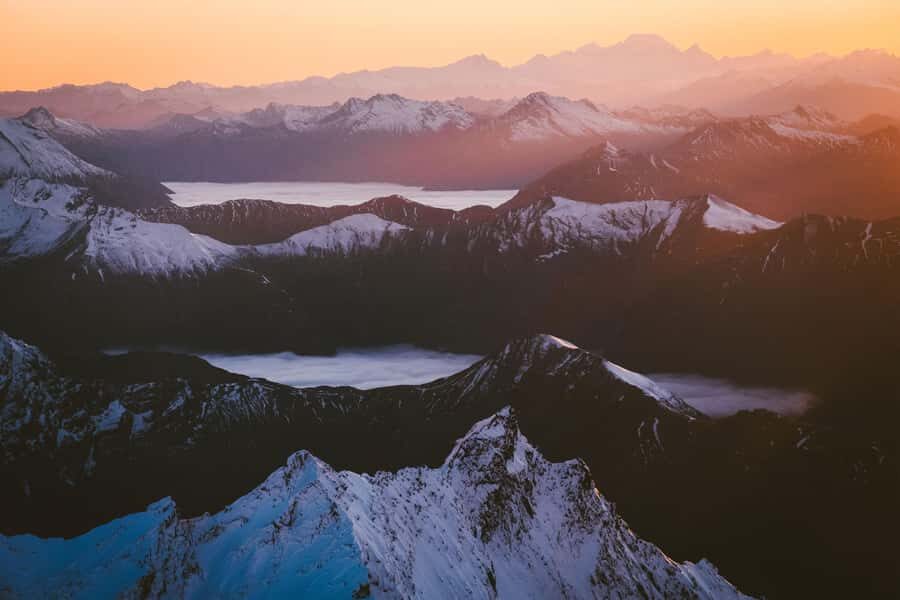
Beyond glaciers, the flight also focuses on Mt. Aspiring National Park. From the air, national parks read like a connected system: mountains feed valleys, and rivers carve the spaces between.
Two named features stand out: the Barrier Range and the head of the Arawhata River. These aren’t just points on a map. From above at sunrise, ranges create layers—one ridge sits in front of another, with the back rows often fading as the light brightens. That layered look can make you feel like you’re getting depth that you can’t easily access from ground viewpoints.
The head of the Arawhata River is also a good reminder that you’re not only flying over ice. You’re flying above the source areas where water begins its long journey. Even though the details you spot will be shaped by what’s visible that morning, you’ll get the bigger idea quickly: ice and mountain streams are part of the same landscape system.
The calm factor: why sunrise flights can feel different
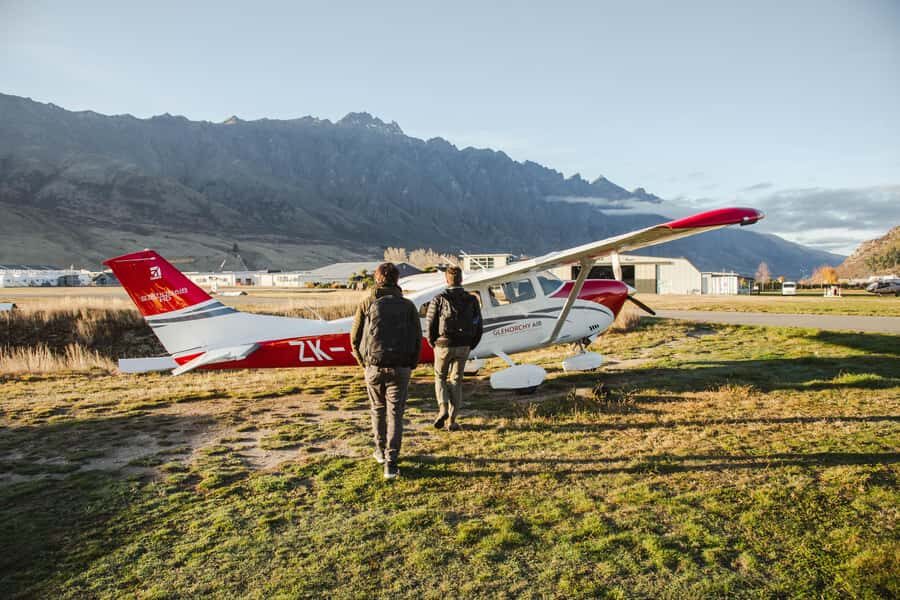
This flight is short, structured, and focused—but it’s also built around mood. Watching the start of a new day from the air tends to do something grounding. There’s a specific quiet to sunrise that makes you slow down, even if you’re excited about photos.
You get that “before the rest of town” feeling too. The first light timing means you’re seeing the back side of the mountains while other people are still getting ready for the day. That changes how the region reads. Instead of a typical scenic view, you get an introduction.
It also helps that the flight is described as having an overwhelming sense of calm as you watch things come alive. Even if you’re not normally a “mood” traveler, sunrise can shift the entire trip from checklist to memory-making.
Price and value: is $298 worth it?
At $298 per person, this isn’t a bargain-basement add-on. The real question is whether you’re paying for something you can’t easily replicate.
Here’s what you’re getting that supports the price:
- 1 hour 15 minutes of dedicated flying time, not just a short taster
- Guaranteed window seat, which is crucial for a sunrise product
- A route designed for a specific sunbreak behind Mt. Aspiring
- Named glacial features (Passchendaele Icefall, Bonar Glacier, Olivine Ice Plateau)
- A small group (max 9), which improves the overall experience
- A built-in conservation contribution: $1 per passenger to the Kea Conservation Trust
Where the price may feel steep is if you’re the type who doesn’t care about sunrise light or doesn’t take advantage of window viewing. If you’re happy with viewpoints from the ground, you might decide this is extra spending.
But if sunrise is your thing—if you like early starts for the sake of light and atmosphere—this is value because the product is specialized. It’s not just “a scenic flight.” It’s a fixed-wing sunrise plan.
Who should book this (and who might skip)
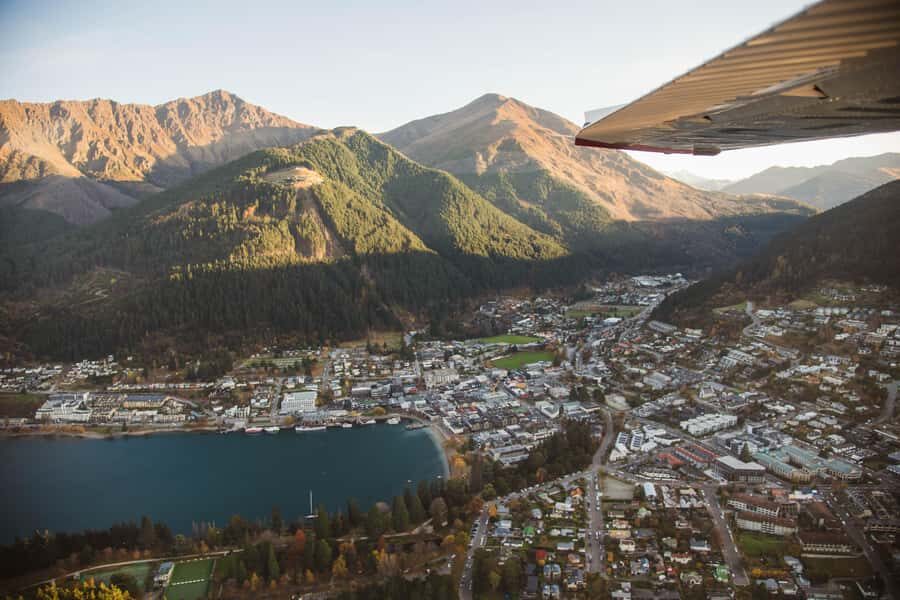
This works best for you if:
- You’re in Queenstown and want the Southern Alps in a different light
- You care about window-seat viewing and a tight, organized experience
- You like glacier scenery and want it from an angle that viewpoints can’t match
- You’d rather spend money on one memorable morning than do multiple half-measures
You might think twice if:
- You’re not comfortable with an early morning start in winter
- You’re mainly looking for a long, active day on the ground (this is no landing)
- You’d rather spend less on aviation and more on walking around areas directly
Should you book the Queenstown Sunrise Glacier Scenic Flight?
If your ideal travel day includes early light, quiet skies, and big named scenery you can’t easily recreate from land, I think this is an easy yes. The sunbreak behind Mt. Aspiring, the glacier-focused route, and the combination of small group + guaranteed window seat add up to a product designed to work, not just to market.
If $298 makes you pause, treat it like a clear tradeoff: you’re buying time in the air over specific icy features at a specific moment. When you want that rare “new day over glaciers” feeling, that’s the point.
FAQ
FAQ
How long is the Queenstown Sunrise Glacier Scenic Flight?
The experience lasts 2 hours total, including 1 hour and 15 minutes of flight time.
Where do I meet for the flight?
Meet inside the main Queenstown Airport Terminal building at the Glenorchy Air kiosk.
Is there a landing during the flight?
No. It’s a round trip scenic flight around Mt. Aspiring with no landing.
Will I have a window seat?
Yes. You get a guaranteed window seat.
What group size is this flight limited to?
The flight is a small group limited to 9 participants.
What is included besides the scenic flight?
In addition to the flight, it includes parking validation at Queenstown Airport and a $1 donation per passenger to the Kea Conservation Trust.
Is there a tour guide, and what language do they speak?
Yes. There is a live tour guide who speaks English.