REVIEW · QUEENSTOWN
Mt Cook Tour & Ultimate Alpine Experience Combo from Queenstown
Book on Viator →Operated by Cheeky Kiwi Travel · Bookable on Viator
Early mountains set the tone.
This full-day combo tour strings together bus viewpoints and aircraft time so you see Aoraki/Mt Cook from multiple angles in one long day. You’ll also get regular photo stops on the way out of Queenstown, including gorge scenery and iconic South Island lake views, then end with more chances to stretch your legs around the national park before heading back to town.
What I like most is the built-in variety: you’re not stuck staring from one roadside pull-off. You’ll also get a real “wow” component with a planned glacier landing on the Tasman Glacier plus a helicopter and ski plane experience.
The main drawback is the weather: the flight portion is dependent on conditions and can be changed or canceled on the day, so plan your expectations around flexibility.
In This Review
- Key highlights you’ll feel all day
- Why this Mt Cook day feels like three trips in one
- Morning logistics: the 6:30am start and how to prep
- Queenstown to Kawarau Gorge: get your bearings fast
- Cromwell and Lindis Pass: wine country meets alpine altitude
- Omarama plains: a quick break before the national park
- Lake Pukaki: the approach that makes Aoraki feel real
- Ski plane and helicopter time: where the day turns cinematic
- Tasman Glacier landing: 20 minutes on snow and rules you should follow
- Aoraki/Mt Cook Village and Te Wahipounamu: short hikes, big payoffs
- Visitor Centre stops: when weather nixes the plan
- The road back: salmon farm feeding and seasonal ice cream
- Price and value: what you’re really paying for at $505.15
- Weather dependence: how to think about risk without losing the fun
- Who this tour fits best (and who might want a different plan)
- Should you book the Mt Cook bus + ski plane + helicopter combo?
- FAQ
- How long is the Mt Cook Tour & Ultimate Alpine Experience combo?
- What time does the tour start and where do I meet?
- Is pickup available?
- How many people are on the tour?
- What’s included, and is lunch provided?
- Do I get time to walk around at Mount Cook?
- What if the flights are canceled due to weather?
Key highlights you’ll feel all day
- Small group (max 15) with a guide who helps you choose what to do during free time
- Multi-vantage route: Queenstown → Kawarau Gorge → Cromwell → Lindis Pass → Omarama → Lake Pukaki
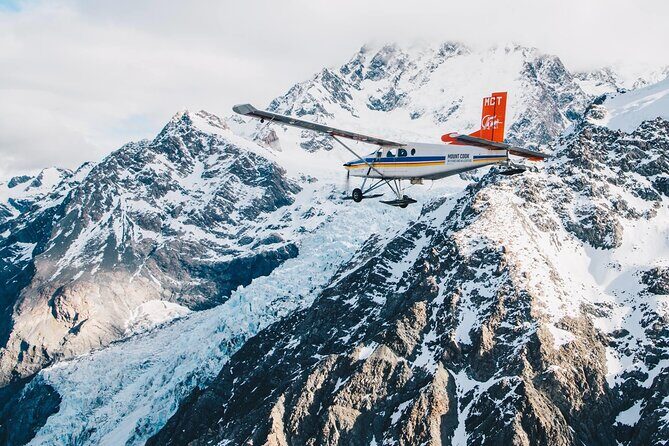
- Ski plane + helicopter combo for a big aerial view of the Southern Alps
- Tasman Glacier landing with a short on-glacier walk window
- Free time at Aoraki/Mt Cook for walks or optional add-ons depending on weather
- Stops on the return route like a local salmon farm and seasonal fruit ice cream at Jackson Orchards
Why this Mt Cook day feels like three trips in one
The best thing about this tour is how it changes your viewpoint every few hours. One part is pure road travel—lakes, passes, and valleys. Another part is airborne, where the mountains stop looking flat and start looking huge. The final part is on foot at the national park, so you’re not just looking at scenery from a bus window.
The combo also helps you cut through decision fatigue. You get guidance on what to do with your limited time at Mount Cook Village and what’s worth a short hike versus staying closer to viewpoints. That matters because the area is big, and weather can shift fast.
Other Queenstown tours we've reviewed in Queenstown
Morning logistics: the 6:30am start and how to prep
This day starts early, meeting at The Station – Home of Adventure on the corner of Shotover & Camp Streets (25 Shotover Street) at 6:30am. Even if you’re staying near town, the early pickup time makes it feel like you’re getting a head start on the mountains rather than squeezing them in after lunch.
Pack for changing conditions. The day includes a long bus drive plus outdoor time at Aoraki/Mt Cook, and aircraft operations depend on weather. Bring layers you can adjust quickly, plus something warm for the glacier landing day if you’re sensitive to cold.
One practical note: lunch is not included, but you will have opportunities to buy food along the way. The tour provides water and snacks, though, which helps you get through the morning without feeling totally snack-dependent.
Queenstown to Kawarau Gorge: get your bearings fast
You leave Queenstown in the morning with your guide setting the scene and pointing out key highlights as you drive. After that, you pass through Kawarau Gorge with views tied to a few classic stops along the route, including the Kawarau Suspension Bridge and Roaring Meg Lookout when timing and light cooperate.
This is a good “warm-up” section. It’s not the big snow-capped peak moment yet, but you’re building context: where the valleys open up, where the road bends toward the Alps, and why this part of the South Island is famous for big-sky scenery.
Expect it to be partly about photos and partly about settling into the schedule. Early morning also means you might feel like you’re doing a lot of moving before you even reach the main attraction—so keep your energy steady with the provided snacks and water.
Cromwell and Lindis Pass: wine country meets alpine altitude
Once you head out beyond the gorge, you enter Cromwell, known for vines and fruit growing. The tour crosses Lake Dunstan and follows the lake toward Lindis Pass, which is one of the few alpine road routes that works when other mountain crossings are blocked.
At Lindis Pass, you get a short lookout stop—about 15 minutes—and that brief window is usually enough to capture the steep drop-offs and valley patterns you can’t fully appreciate from the bus alone. This is also where you start to understand the day’s scale: the land goes from orchard-friendly to proper alpine terrain surprisingly quickly.
Omarama plains: a quick break before the national park
Next up is Omarama, with a stop that’s more about stretching your legs and resetting than chasing a single landmark. You’ll drive through the Mackenzie district plains, and it’s the kind of open country that makes the later mountain views feel even more dramatic.
This is a nice pacing moment. If you tend to get restless on long road trips, the Omarama break helps you reset before heading into Aoraki National Park territory.


Lake Pukaki: the approach that makes Aoraki feel real
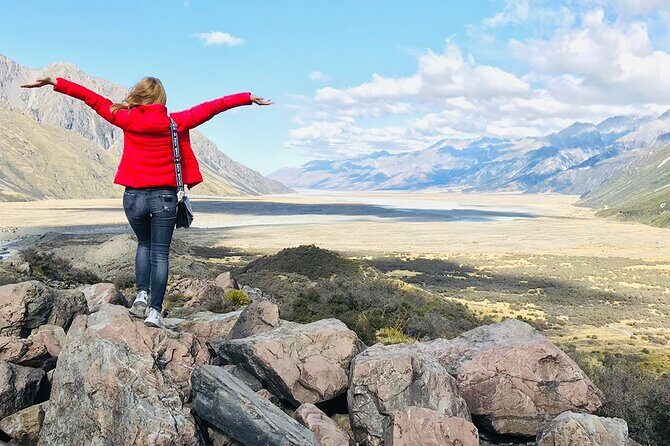
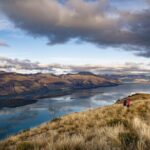
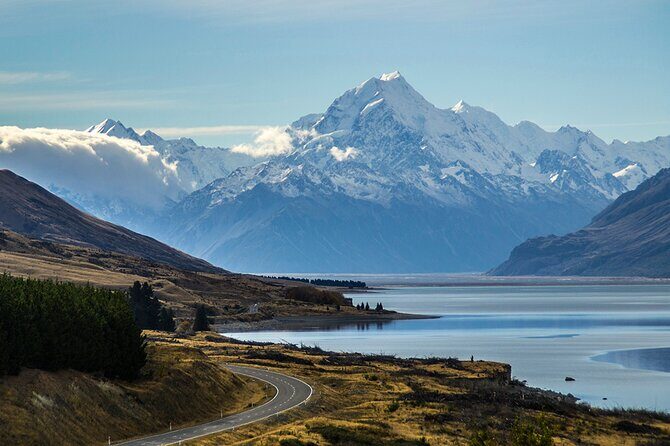
As you turn toward the park, Lake Pukaki appears ahead. The tour brief calls it one of the bluest lakes you’ll see, framed by the Aoraki mountain backdrop. Whether you see it in crisp morning light or more muted afternoon light, it’s the kind of view that instantly signals you’re arriving.
You only get a short stop here—about 15 minutes—so you’ll want to treat it as a photo-and-stand moment, not an all-day picnic. If you’re the type who likes to linger, remind yourself the day is timed around aircraft and glacier landing options later.
Ski plane and helicopter time: where the day turns cinematic
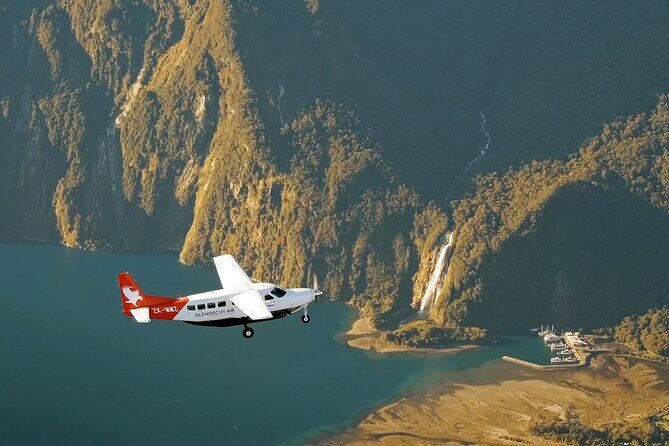
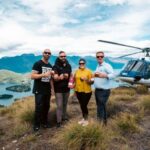
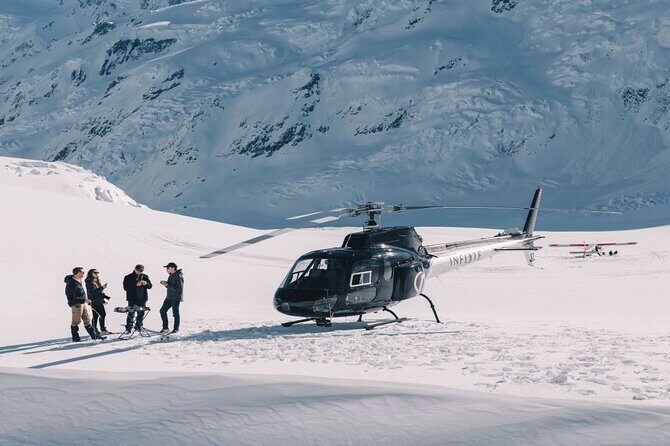
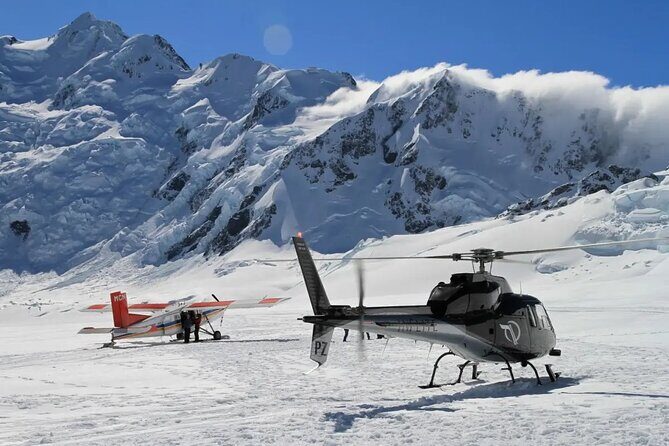
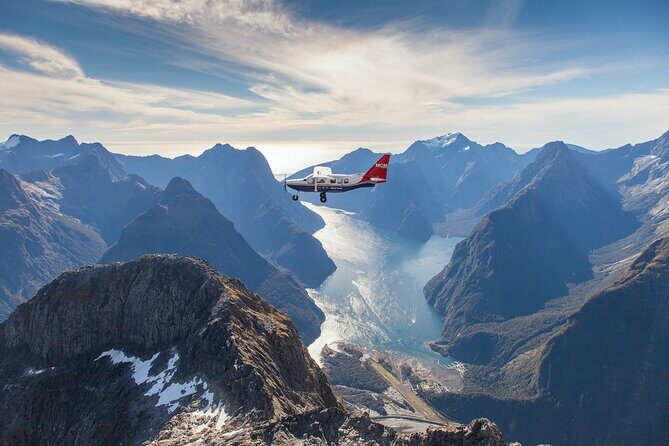
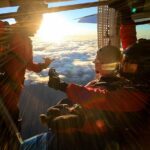
The heart of this experience is the Mount Cook ski plane and helicopter combo with a glacier landing. After you check in, you’ll fly over the mountains, including the chance for a Tasman Glacier landing as part of the ultimate alpine experience.
This portion is time-limited by design. That sounds obvious, but it’s worth thinking about: the point isn’t to spend half the day in the air—it’s to get a fast, high-impact view from places you’d never reach by road.
Here’s what to keep in mind for comfort. One review noted that seating can feel a bit cramped throughout the aircraft segments. So if you’re tall or narrow-space sensitive, keep your expectations realistic and focus on the view, not comfort.
Also, don’t panic if something feels delayed. There was mention of a longer wait at an airport area on at least one day. The good part is that your guide team helps keep people on track so you’re not totally guessing what comes next.
Tasman Glacier landing: 20 minutes on snow and rules you should follow
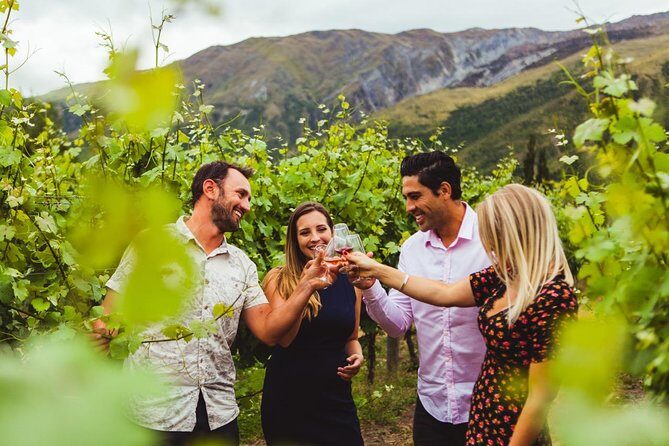
Landing on the Tasman Glacier is the moment most people remember first. The tour includes about 20 minutes on the glacier itself, plus time to explore a marked area.
In one of the standout review notes, the on-glacier walk window was about 15 minutes in a staked-out area for photos. That’s not a hike where you can wander for a long time. Think quick look, quick photos, then back to the schedule.
You’ll also want to listen carefully to instructions. One review mentioned the importance of not touching things on seats during a segment, which is a good reminder that glacier and aircraft operations have safety systems you don’t want to interfere with. If you hear it once, it’s because they really need everyone to follow it.
Aoraki/Mt Cook Village and Te Wahipounamu: short hikes, big payoffs
After the flight portion, you arrive at Mount Cook Village with time to enjoy the area. Weather permitting, you’ll also get opportunities for mountain shots right around the village. At 3724m, Aoraki/Mt Cook is New Zealand’s highest peak, and the view can feel close even when it’s miles away.
You’ll have around 30 minutes of free time in the national park area. That’s enough for a short walk or a viewpoint stop, but it’s not enough for a long trek. If you like making choices fast, this is where a guide helps a lot—one review praised how their guide kept things organized when the day shifted due to conditions.
Your options may include short routes like the Kea Point Track or Sir Edmond Hillary Alpine Centre area activities (weather and time dependent). If you’re more ambitious, another review described doing the Hooker Valley walk as a longer option (about a 3-hour return), though that’s not guaranteed for every day’s schedule. If you want that kind of walk, ask your guide what fits once weather and timing settle.
Visitor Centre stops: when weather nixes the plan
The tour also includes time at the Aoraki/Mt Cook Visitor Centre. Even if you don’t get ideal sky visibility, a visitor center stop gives you a grounding moment: it helps connect what you’re seeing outside to what you’re learning about the region’s alpine environment.
You’re only there for about 30 minutes, so it’s a quick visit, not a museum marathon. Still, it can be useful on a day when clouds roll in and you want to make sense of the terrain rather than feeling like the mountains are teasing you.
One thing I’d plan around: aircraft decisions happen based on conditions. Your ground portion keeps moving in all weather, but your main aerial/glacier segment might be adjusted. If that happens, your guide’s job is to keep you seeing the area instead of wasting the day.
The road back: salmon farm feeding and seasonal ice cream
On the way back toward Queenstown, the tour breaks up the long return drive with a couple of fun stops.
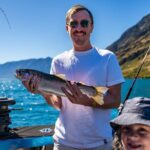
First is High Country Salmon, where you can feed the fish and taste some of the freshest salmon in the region (and yes, it’s a good stop even if you’re not a huge fish person). It’s about 15 minutes, so it’s quick and sensory—smells, sounds, and lots of movement near the tanks.
Next is Jackson Orchards during summer months, with chances to try or buy local fruit and real fruit ice cream. That’s a classic South Island kind of stop: small, local, and a nice payoff when you’ve been dealing with alpine cold and early mornings.
Then you roll back into Queenstown for the end of the tour, roughly an hour before the day’s close and back at the original meeting point.
Price and value: what you’re really paying for at $505.15
At $505.15 per person, this isn’t a budget day trip. But you’re paying for bundling three experiences into one schedule: a guided bus route with multiple scenic stops, plus ski plane and helicopter flight components, plus an actual glacier landing.
That combo matters because the glacier segment is the hardest and most weather-sensitive part to access. When weather cooperates, you get a type of experience you can’t easily recreate on your own. And even when conditions reduce or cancel the flight component, the day still includes a full scenic drive and short national-park walking time.
The value question comes down to your personality:
- If you want the big alpine bucket list moment, the price is easier to justify.
- If you hate weather uncertainty or dislike long days, you may find it expensive for the chance you might not fly.
Weather dependence: how to think about risk without losing the fun
This tour’s flights are weather dependent, and the decision is made by the flight partner on the day. That means you don’t get to lock in the aerial portion until you’re already on the road.
What you can control is your mindset and your planning. Wear good layers, keep your camera ready, and be ready to switch from glacier-flight expectations to ground-view expectations if conditions change. One review mentioned a guide and team staying communicative when weather interrupted part of the planned expedition, and that kind of guidance makes a big difference in how the day feels.
Some days go all the way. Others shift. Either way, the bus portion is designed to operate in all weather, so you should still come away with plenty of scenery and photo opportunities.
Who this tour fits best (and who might want a different plan)
This is a strong choice if you:
- Want one-day efficiency to see Queenstown area highlights and the Aoraki region without planning multiple trips
- Like short, scenic stops rather than one long hike
- Really want the glacier landing experience and don’t mind a long early start
It’s less ideal if you:
- Hate long days; this is about 12 hours total, and the return can feel tiring
- Dislike cramped seating situations on aircraft segments
- Expect every day to run exactly as advertised, regardless of weather
Families can do this too, with one important caveat: children aged 7 and under need a child safety car seat, though one can be provided with 24 hours’ notice.
If you’re traveling alone or in a small group, the max 15 travelers helps keep things organized and gives you a real chance to ask questions.
Should you book the Mt Cook bus + ski plane + helicopter combo?
I’d book it if glacier landing and aerial views are near the top of your South Island wishlist—and if you can handle an early start and weather variability. This is the kind of day where, when conditions cooperate, it genuinely feels like you get more than one vacation’s worth of scenery.
I would hesitate if you’re planning around a tight schedule where losing the flight portion would ruin your trip. The ground route is still scenic, but the most unique piece is the aerial/glacier component, and that’s the piece that can change.
If you do book, do it with two smart moves: dress for cold alpine conditions even if it’s warm in Queenstown, and be ready to make quick decisions during free time at Mount Cook Village. Guides like Joseph and John were specifically praised for keeping people informed and moving, and that’s exactly the kind of leadership you want on a weather-driven mountain day.
FAQ
How long is the Mt Cook Tour & Ultimate Alpine Experience combo?
It runs about 12 hours.
What time does the tour start and where do I meet?
You meet at The Station – Home of Adventure in Queenstown at 6:30am (corner of Shotover & Camp Streets, 25 Shotover Street). The tour returns to the same meeting point.
Is pickup available?
Yes, pickup is offered.
How many people are on the tour?
The group size is capped at 15 travelers.
What’s included, and is lunch provided?
The tour includes a fully guided small-group bus, scenic flights with glacier landing, plus water and snacks and an air-conditioned vehicle. Lunch is not included (you can purchase along the way).
Do I get time to walk around at Mount Cook?
Yes. You’ll have free time in Aoraki/Mt Cook National Park and time at the Visitor Centre. Exact activities depend on weather and timing.
What if the flights are canceled due to weather?
Flight activities are subject to weather and availability, and the decision is made on the day. If the experience is canceled due to poor weather, you’ll be offered a different date or a full refund.