REVIEW · QUEENSTOWN
Milford Sound Heli Tour from Queenstown with 2 Alpine Landings
Book on Viator →Operated by Totally Tourism - The Helicopter Line · Bookable on Viator
This is the fastest way to Milford.
In about 1.5 hours, you’re flying from Queenstown into Fiordland National Park (Te Wahipounamu), then hovering above the famous peaks before landing in Milford Sound. You’ll also get a second stop on remote ground in the mountains, where the scale feels real in a way a road trip can’t match.
Two things I really like: first, the chance to land rather than just circle—Milford Sound plus that remote alpine landing. Second, the pilot guide’s live commentary turns the flight into a guided tour, not just a seat in the sky.
One thing to consider: weather rules the day. Both landings are weather-dependent and the pilot chooses the exact landing spots based on conditions, so you need a little flexibility.
In This Review
- Key things to know before you go
- Queenstown–Milford Sound by helicopter: what you’re really buying
- The flight rhythm: how a 1.5-hour ride stays interesting
- Stop over Fiordland National Park: Te Wahipounamu from above
- Milford Sound landing: seeing the fiord and stepping on it
- The second stop: a remote alpine landing near Tukuko Glacier or Glacier Basin
- Seeing Mitre Peak twice: why it hits harder on the way back
- Pilot guide impact: live commentary turns the ride into a story
- Value check: is $859.26 worth it for 1.5 hours?
- Who this suits best (and who should think twice)
- Before you book: my decision checklist
- Should you book this Milford Sound heli tour with 2 alpine landings?
- FAQ
- How long is the Milford Sound heli tour from Queenstown?
- Is hotel pickup and drop-off included?
- What landings are included?
- Are the landings guaranteed?
- What should I wear for this tour?
- What’s the cancellation window for a full refund?
Key things to know before you go
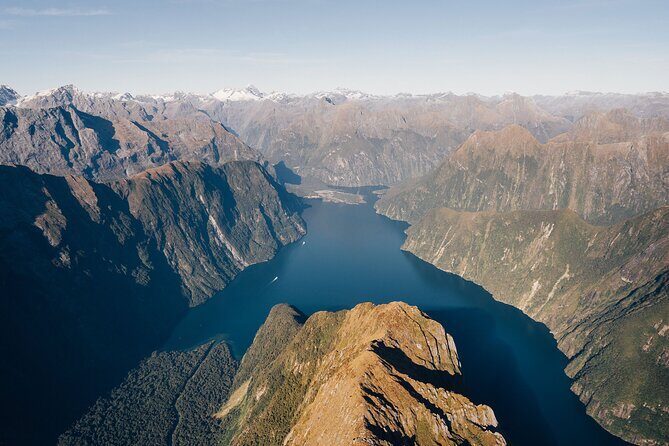
- Two alpine landings: Milford Sound first, plus a remote alpine landing on return leg.
- Mitre Peak and glacier views: you’ll aim your camera at the towering points and ice country.
- Pilot-led, live commentary: you get orientation and local talk while flying.
- Small group: maximum 6 travelers means less crowding and more personal attention.
- Hotel pickup and drop-off: centrally located Queenstown hotels make the logistics easy.
- Cold-weather ready: warm clothes and sturdy footwear help, even though you’re only on foot briefly.
Queenstown–Milford Sound by helicopter: what you’re really buying
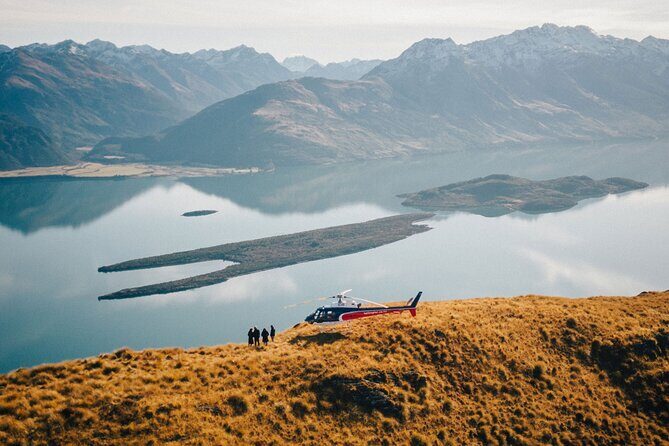
This tour isn’t trying to be a cheap shortcut. It’s paying for access—speed, height, and the ability to stop where roads simply don’t go. When you fly from Queenstown to Milford Sound, you’re crossing some of the South Island’s most dramatic terrain fast, and you see it from the only angle that actually explains the place: above it.
I like that you’re not stuck watching a screen or following a bus schedule. You’re in the air for about the same amount of time as the overall tour length, with the pilot guide pointing out what you’re looking at. That matters at Milford, because there’s a lot happening at once—steep walls, hanging valleys, waterfalls, and those famous landmark peaks.
The other big value piece is the two landings. A lot of Milford “by air” options end up being just a flyover. Here, you’re set up to actually touch down at Milford Sound, and then again somewhere remote in the alpine region. That changes how you remember the day.
Other Queenstown tours we've reviewed in Queenstown


The flight rhythm: how a 1.5-hour ride stays interesting
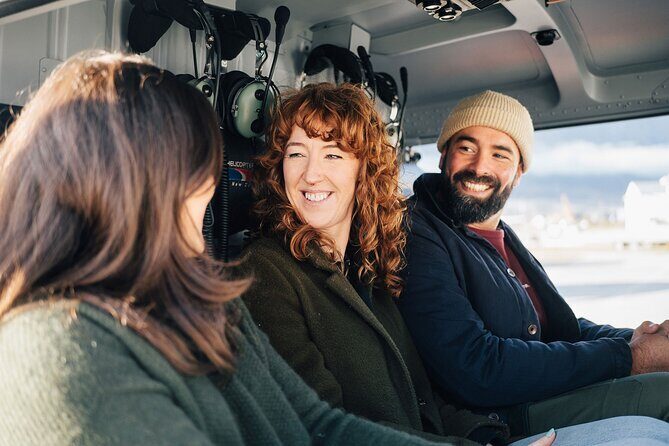
You’ll start with hotel pickup in Queenstown and head to the helicopter operator’s base. Then it’s into the aircraft for the scenic flight, with live commentary throughout.
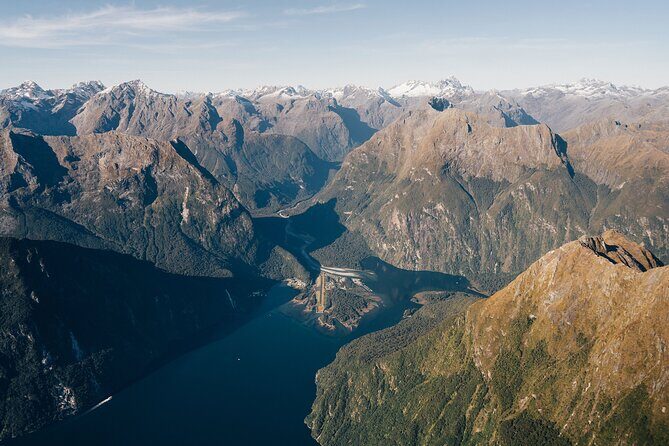
A helicopter tour has a different feel than a plane. The motion is more immediate, and the views come in layers: first broad coverage of Fiordland’s valleys, then sharper detail as you near the fiord and peaks. You’ll also spend moments hovering, which is when you’ll really understand why Milford Sound became legendary.
What to watch for while you’re flying
- Mitre Peak: the pilot will cue you to look for the signature shape and the way the fiord cuts through the mountains.
- Glacier scenery: you may see crevasse-filled ice features from above, then you’ll be close enough to appreciate the scale during the alpine landing.
- Rainforest and bush-lined valleys: from altitude, you can spot how green patches cling to steep slopes and ridges.
And yes, camera time is real. I suggest bringing something you can stabilize quickly—your arms will do more work here than you expect, even if the pilot keeps things smooth.
Stop over Fiordland National Park: Te Wahipounamu from above
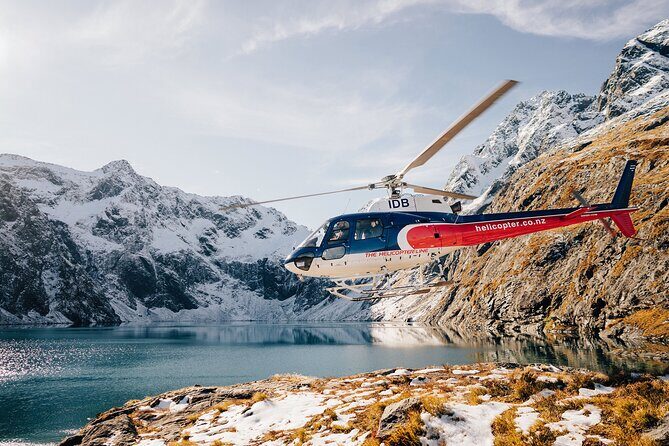
Before you’re anywhere near the fiord, you’re already in the heart of Fiordland National Park (Te Wahipounamu). This part is about orientation—how the coastline and valleys stack up, and how the terrain funnels your eyes toward Milford.
From the air, you’ll see lush rainforest patterns, bush-lined valleys, and the steep geometry of the Southern Alps. The pilot guide’s job is to turn those shapes into names you can remember: what’s a peak, what’s a glacier field, and what’s the route that carved the fiord over time.
Why this stop matters
You don’t just want a postcard view of Milford Sound. You want to understand the “why” behind it. Flying in first gives you that context before the landings make everything feel physical.
Possible drawback in this phase
If cloud or weather limits visibility, you might get more emphasis on general scenery rather than pinpoint detail. That’s not a failure—it’s simply how mountain weather works.
Milford Sound landing: seeing the fiord and stepping on it
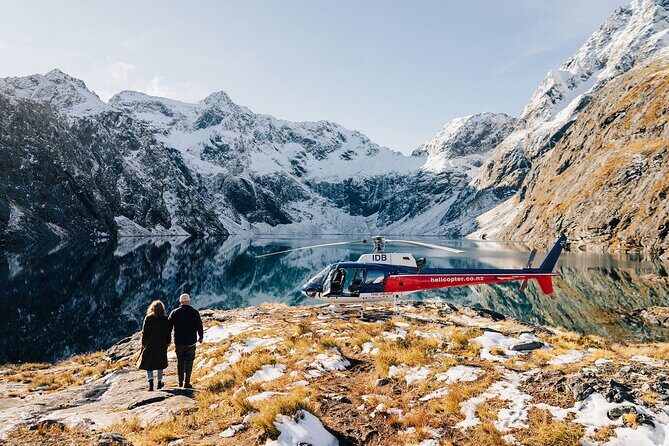
When you reach the Milford Sound area, you’ll hover above the iconic scenery—especially Mitre Peak—and then land in Milford Sound. This is the part most people remember most clearly because it’s the rare combo: dramatic views plus a real touchdown.
What’s special about landing here is the perspective shift. In the air, you’re reading the terrain. On the ground, the fiord feels like a place you could get lost in—tight walls, water movement, and the depth disappearing far out into the distance.
You’ll spend time at Milford Sound before returning to the helicopter. Then it’s back into the air for the next landing and the return flight.
Small-group advantage
With a maximum of 6 travelers, this doesn’t feel like a parade. You’re not fighting for space, and it’s easier to hear the pilot’s guidance when they cue what to look for next.
The second stop: a remote alpine landing near Tukuko Glacier or Glacier Basin
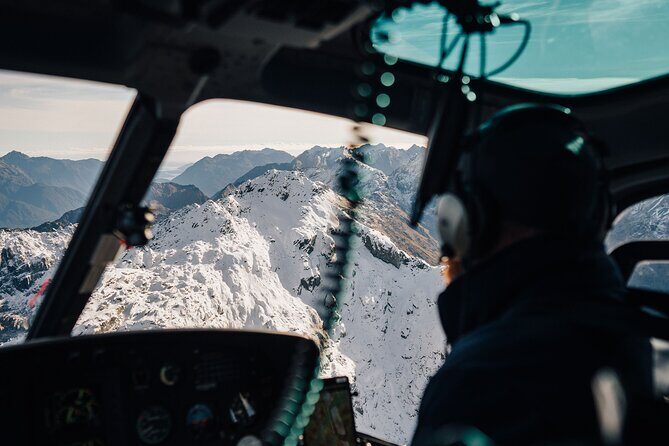
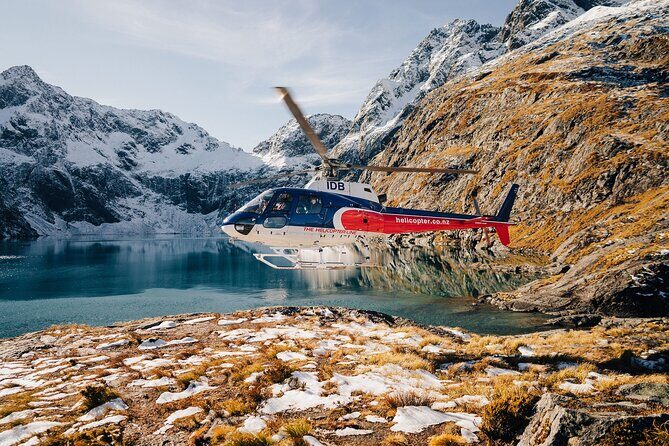
Now for the “only-in-a-helicopter” moment. After Milford Sound, you’ll fly over glacier country—specifically around Tukuko Glacier—and then you’ll land in the alpine region.
Your second landing is weather-dependent, and the pilot may land at Tukuko or at Otago’s Glacier Basin instead. Either way, the point is the same: you’re stepping onto high-country terrain far from roads, where the air feels colder and the views feel wider than you expect.
What to look for during the alpine landing
- Crevasse-filled glacier scenery from the nearby vantage points
- How the mountains sit close together, with slopes dropping away fast
- The “grasslands peppered with detail” effect you get in alpine zones where vegetation breaks the ice-and-rock look
This stop isn’t about walking miles. It’s about getting your bearings fast and experiencing the scale up close.
What to wear
You’ll want warm clothing and suitable footwear. Even if you’re only on the ground briefly, cold air and mountain surfaces can bite. (And yes, I’d rather you overpack a layer than regret it.)
Other Milford Sound tours we've reviewed in Queenstown


Seeing Mitre Peak twice: why it hits harder on the way back
Mitre Peak is a big deal, and the tour design leans into that. You’ll get that view in the approach phase—hovering as you get close—and you’ll also fly past those same towering peaks on your return.
That repeat matters. First time, you see it as a symbol. Second time, you notice how the fiord and the surrounding ridges line up with it. The peak stops being just a name and becomes part of how you picture Fiordland.
If weather is cooperative, this is also when your photos usually go from decent to great—because light and clarity can shift quickly in mountainous areas.
Pilot guide impact: live commentary turns the ride into a story
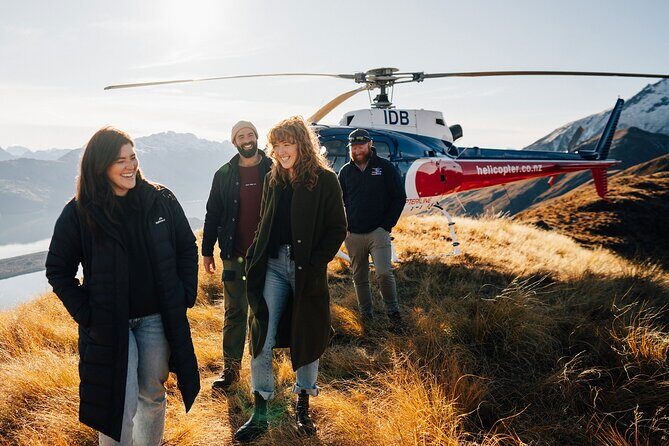
I love tours where the person in charge can explain what you’re seeing without making it sound like a lecture. This one is guided by your professional pilot with entertaining, informative commentary.
The names you might hear vary day to day, but I’ve picked up from the range of pilot experiences that people often connect strongly with the guide in the cockpit. Some pilots described include Bill, Pete, and Jono, and the common thread is clear: they’re engaged with passengers, and they use the flight to help you look smarter.
What that means for you
- You’re more likely to spot things as they appear, not just after you land.
- You learn the basic geography you’ll want later if you keep exploring Fiordland by foot or boat.
- The flight feels less like waiting for the next viewpoint and more like following a moving guidebook.
Value check: is $859.26 worth it for 1.5 hours?
Let’s be real: $859.26 per person is a splurge. The value comes from what’s bundled and what it replaces.
You’re paying for:
- Flight time of about 1.5 hours
- Two landings (Milford Sound plus remote alpine terrain)
- Hotel pickup and drop-off from centrally located Queenstown hotels
- Live pilot commentary
- GST included
You are not paying for food and drinks, so plan to handle meals separately.
So is it worth it? If your goal is to see Milford Sound and the Southern Alps from the air and on the ground, this is one of the most direct ways to do it. If you’re happy with a bus ride and a slow scenic day, you’ll likely feel the cost more sharply. But if you want a time-efficient, high-impact day that feels like a once-only perspective, the price starts to make sense fast.
My practical tip: treat this as your big anchor activity in Queenstown. If you stack it with other Milford-adjacent day plans, your money and energy spread out better.
Who this suits best (and who should think twice)
This works best if you:
- Want the shortest path from Queenstown to Milford Sound
- Appreciate scenery you can only get from above
- Like guided talk that helps you recognize what you’re seeing
- Don’t mind that the exact landing spots can change with conditions
It may be less ideal if:
- You hate waiting on weather. Landings are weather-dependent, and the pilot makes the call.
- You’re traveling with very tight timing constraints elsewhere that can’t flex.
Body comfort note
There’s a total weight limit of 320 lbs. Also, you’ll want moderate fitness for cold conditions and short periods on the ground.
Before you book: my decision checklist
Here’s how I’d decide, fast:
- If you really want two landings rather than just a flyover, book this.
- If your trip days are flexible enough to absorb weather changes, you’ll enjoy it more.
- If Milford Sound is your top priority and you want to see more than just the fiord floor, the helicopter angle is a big advantage.
If you’re on the fence because of price, focus on this: you’re not just paying for a ticket. You’re paying for access—landing in places you can’t reach normally, plus the pilot-led interpretation that keeps the whole flight engaging.
Should you book this Milford Sound heli tour with 2 alpine landings?
Yes, if your style of travel is about big views, short time on the clock, and a day that feels like a story told from the sky. The two landings are the key selling point, and the pilot commentary is what keeps the experience from feeling like a simple sightseeing loop.
Hold off if you’re looking for a low-cost alternative to a road trip, or if your schedule can’t handle mountain weather influencing what happens and where you land. Otherwise, this is a strong choice for a high-impact Milford Sound day.
FAQ
How long is the Milford Sound heli tour from Queenstown?
The duration is about 1 hour 30 minutes, with flight time listed as 1 hour 30 minutes.
Is hotel pickup and drop-off included?
Yes. You’ll get pickup and drop-off from centrally located Queenstown hotels.
What landings are included?
You’ll land in Milford Sound and also make a second remote alpine landing. The second landing location is weather-dependent and can be near Tukuko Glacier or in Otago’s Glacier Basin.
Are the landings guaranteed?
No. All landings are weather-dependent and based on the pilot’s discretion.
What should I wear for this tour?
Warm clothing and suitable footwear are recommended because temperatures can be cold.
What’s the cancellation window for a full refund?
You can cancel up to 24 hours in advance of the experience start time for a full refund.