REVIEW · QUEENSTOWN
Kiwi Park Queenstown Admission
Book on Viator →Operated by Kiwi Park Queenstown · Bookable on Viator
Kiwi viewing in the dark sounds simple, then it gets magical. Kiwi Park Queenstown is a compact wildlife park in central Queenstown where you can spot native birds, meet a tuatara, and catch kiwis in a nocturnal-style viewing setup.
I like that your ticket works like a self-paced visit for the whole day, so you can slow down when you find a bird exhibit that grabs you. I also love the included complimentary audio tour, which helps you move through the park without feeling rushed or guessing what you’re looking at.
My only real caution: the kiwi enclosure is intentionally dim, so if you go in expecting bright, easy viewing, you may come away wanting better visibility or more time for your eyes to adjust.
In This Review
- Key Points I’d Plan Around
- Kiwi Park Queenstown: Where It Fits in Your Queenstown Day
- Admission Value at $39.72: What You’re Really Buying
- How the All-Day Ticket Works (and Helps You Avoid Rushing)
- Conservation Show: Free-Flying Birds in a Netting Enclosure
- Kiwi Encounters in the Dark: How to Actually See Kiwis
- Tuatara Encounter: Prehistoric Lizard Up Close
- Walking the Park: Forest Walk, Streams, and Bird Exhibits
- Location and Timing: Getting There Without Stress
- Food and Extras: A Simple Break That Helps You Stay Longer
- Rainy-Day or Cold-Day Winner
- Who Should Book Kiwi Park Queenstown
- Should You Book Kiwi Park Queenstown?
- FAQ
- What time does Kiwi Park Queenstown open and close?
- How long should I plan to spend at Kiwi Birdlife Park?
- Is admission valid for the whole day?
- Do I need to print anything, or can I use a mobile ticket?
- What’s included with admission?
- What kinds of animals can I see besides kiwi?
- When are the kiwi encounters?
- When are the conservation shows held?
- Is parking included?
- Can I get a refund if I cancel?
Key Points I’d Plan Around
All-day admission lets you pace yourself instead of sprinting between stops
Complimentary audio tour helps you understand what you’re seeing as you walk
Two daily show types (Conservation Show and Kiwi Encounters) give structure to your visit
Nocturnal kiwi viewing means dark viewing and slower, patient watching
Central Queenstown location makes it easy to add to a busy day, even when the weather turns
Kiwi Park Queenstown: Where It Fits in Your Queenstown Day
Kiwi Park is the kind of stop that works whether you’re doing a big sightseeing day or you just want one calm block of time. The park sits in central Queenstown and is close to the main fun-zone area around the gondola and Skyline complex. That proximity matters because Queenstown days can get choppy: you can move between viewpoints, then duck into something sheltered and meaningful when you need a break.
The experience is built for a 2 to 3 hour window for most people, and that feels right for the scale of the park. It’s also family-friendly in a practical way: kids can handle the walking, and the exhibits are designed to make you stop without needing a formal guided tour.
If you’re visiting in rainy or cold weather, Kiwi Park is a strong choice. You’re not stuck waiting out the day. You’re out doing something, watching birds, learning about conservation, and getting your kiwi moment in a controlled setting.
Other Queenstown tours we've reviewed in Queenstown



Admission Value at $39.72: What You’re Really Buying
At $39.72 per person, Kiwi Park is not a throwaway add-on. But the value comes from bundling several things into one ticket: an all-day pass, a complimentary audio guide, and scheduled conservation programming that builds context.
Here’s why that matters. A lot of Queenstown activities are either “see something once” or “pay for a guide.” Kiwi Park gives you both a guided-style learning tool (audio) and live presentations (shows), plus the chance to revisit exhibits as many times as you want before the park closes at 5:30 PM.
You also get a mobile ticket. That sounds small, yet it’s genuinely convenient when you’re hopping around Queenstown with limited time and you don’t want paper tickets in your pocket.
If you’re comparing value, focus on time spent and variety. You’ll move through more than the kiwi enclosure: there’s a tuatara stop, multiple bird exhibits, predator viewing, and a forest walk area with streams.
How the All-Day Ticket Works (and Helps You Avoid Rushing)
Your ticket is valid for the whole day, so you do not have to do everything at one set time. That’s a big deal in practice because Queenstown timing can be chaotic. A bus delay, a gondola line, or a late lunch should not ruin your day at Kiwi Park.
The park includes a complimentary audio tour that helps you explore at your own pace. I like that you can start and stop based on interest. If you’re taking photos, you don’t have to leave your exhibit while you hunt down a guide.
A simple strategy helps: arrive during the park’s open hours (it runs 9:30 AM to 5:30 PM). Then plan your shows based on the times available that day and your comfort with the dark kiwi viewing.
Conservation Show: Free-Flying Birds in a Netting Enclosure
The New Zealand Conservation Show is scheduled multiple times daily, depending on the season. In Oct–Apr, it runs at 11:30 AM, 1:30 PM, and 3:30 PM. In Apr–Sep, it runs at 11:30 AM and 3:00 PM.
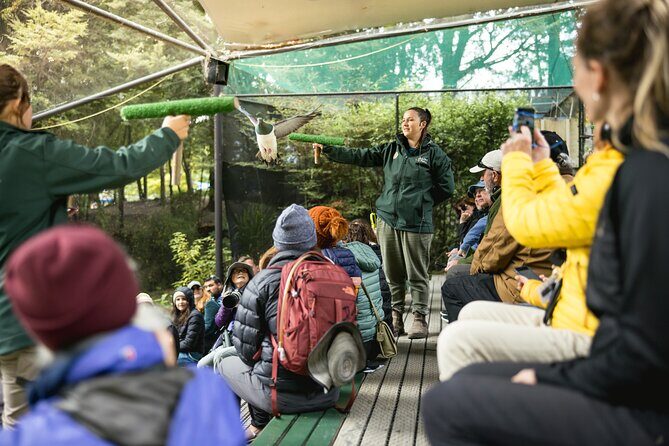
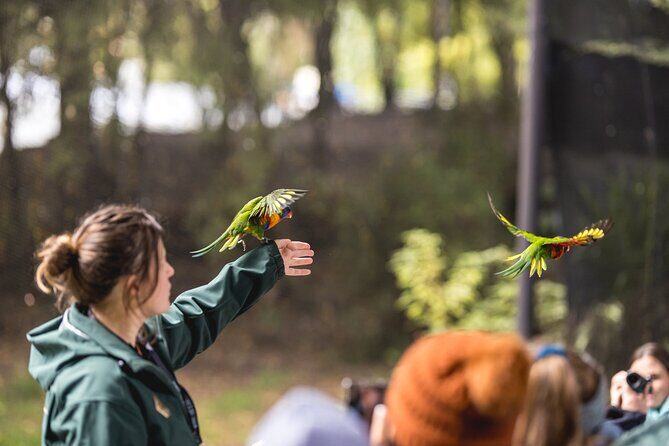
This is one of the most useful parts of your visit because it gives you “what to notice” before you go deeper into the kiwi experience. The show takes place in an outdoor area enclosed in netting, and birds like the kakariki (parakeet) and kereru (New Zealand pigeon) can fly free during the presentation.
You also get up-close looks at birds of prey and more native species you might not spot easily in the wild. The show highlights pateke, buff weka, and Antipodes Island parakeets, among others. That list is why the show is worth timing: it turns a walk through exhibits into an actual learning arc.
One practical tip: if you want to feel like you’re seeing the story unfold, try to catch the show before your kiwi encounter. It gives your brain a framework, so the nocturnal kiwi viewing later feels less random and more intentional.
Kiwi Encounters in the Dark: How to Actually See Kiwis
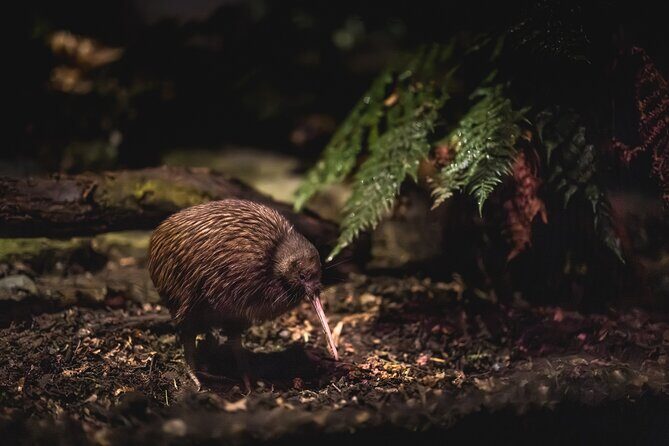
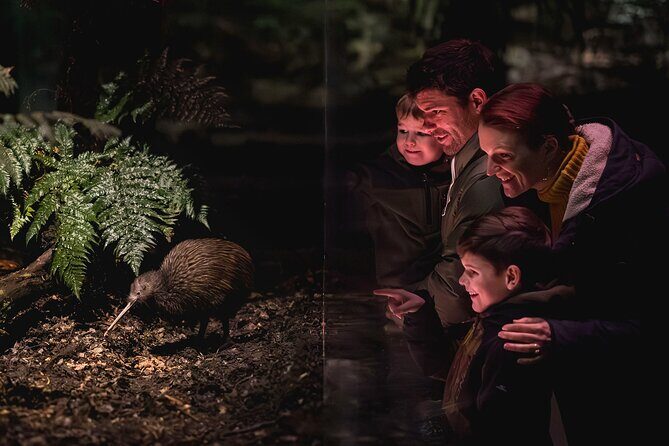
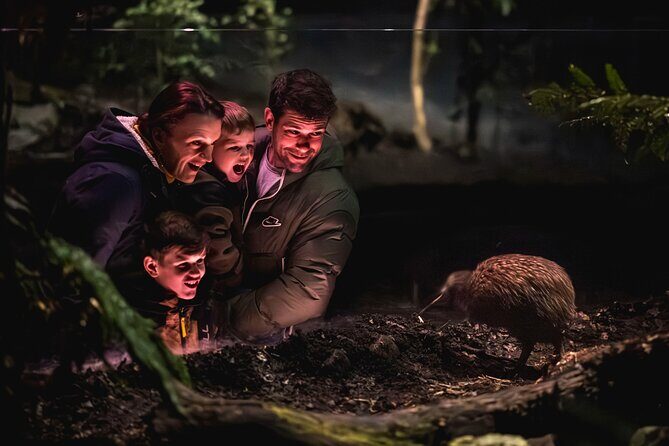
Kiwi viewing is the headline, and it’s also the part that can surprise you. Kiwi Encounters happen at set times, and you’ll view kiwis in specially designed nocturnal enclosures to support natural behavior. That means the environment is dark on purpose.
In Oct–Apr, Kiwi Encounters run at 10:00 AM, 11:00 AM, 12:15 PM, 1:00 PM, 2:15 PM, 3:00 PM, 4:15 PM, and 5:00 PM. In May–Sep, times shift slightly: 10:00 AM, 11:00 AM, 12:15 PM, 1:00 PM, 2:00 PM, 3:45 PM, and 4:30 PM.
The key consideration is viewing comfort. Multiple people noted that the kiwi enclosure is extremely dark and you may initially see only outlines until your eyes adjust. That’s normal, not a failure. Plan to give it patience, not impatience.
I’d also keep your expectations realistic: kiwi are nocturnal, so they may be active when conditions support it, and you’ll need to watch longer than you think. Once you adjust to the darkness, the experience can feel surprisingly intimate because you’re watching real animals doing real behaviors.






Tuatara Encounter: Prehistoric Lizard Up Close
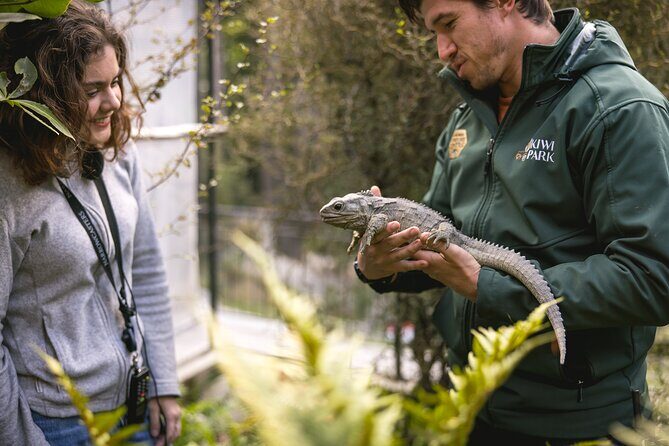
Before or after your kiwi slot, make time for the Tuatara Encounter. This is where you come in contact with a prehistoric lizard often described as a living dinosaur. Even if you’re not a reptile person, this stop tends to land well because it’s so different from the bird-focused parts of the park.
This moment also adds variety to a day that could otherwise become “birds, birds, birds.” It gives you a different conservation lens too, since tuatara are part of New Zealand’s unique native wildlife story.
The encounter is designed for hands-on interaction, but the details on exactly what you’ll do aren’t listed here. So go in ready to follow staff instructions closely and take your time. Wildlife experiences like this work best when you’re calm and observant.
Walking the Park: Forest Walk, Streams, and Bird Exhibits
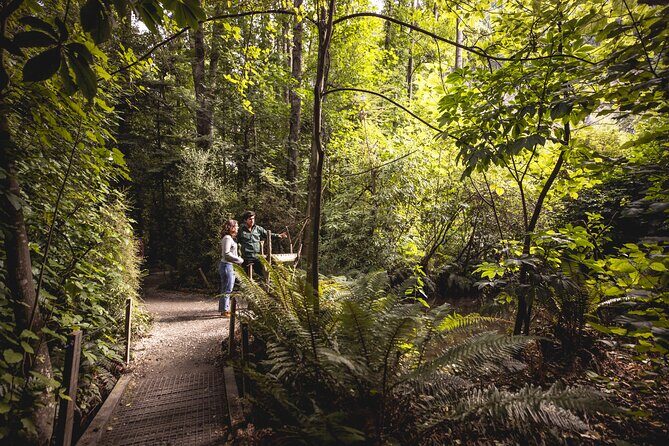
Beyond the big scheduled highlights, Kiwi Park is a pleasant walk through native habitat themes. You’ll see a forest walk area with trout-filled streams and hear about conservation efforts. The park focuses on rehab for injured wildlife and on breeding kiwis for release into the wild.
There are also multiple bird exhibits where you can get closer than you would in the wild. That’s a practical advantage: you’re not competing with distance, vegetation, or weather patterns. In a place like Queenstown, that matters. If the wind is up or visibility is low, wildlife outdoors can become a guessing game.
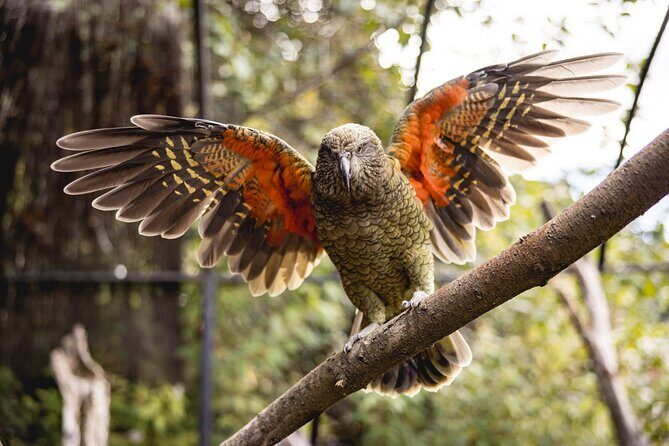
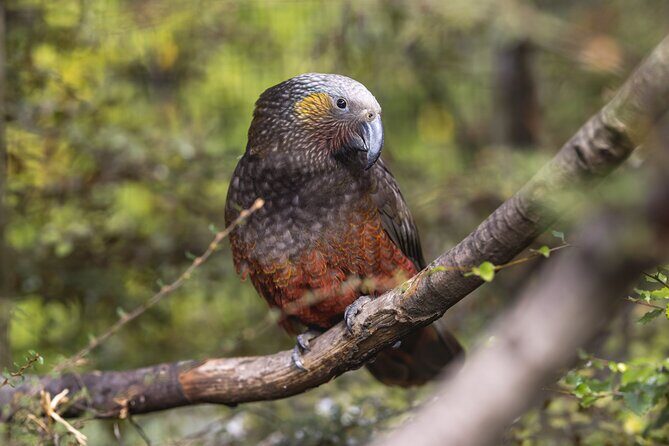
Some of the exhibits that can be especially fun include raptor viewing and the chance to see species you won’t easily find on your own. One exhibit that many people call out is kea, which is known for its personality. If you enjoy quirky native birds, make sure you don’t rush through the sections that feel like “just another cage.” There’s often a reason a specific species draws attention.
Location and Timing: Getting There Without Stress
Kiwi Park’s central location near major transport and the gondola zone helps you plan without losing a whole day to logistics. You do need to think about parking because it’s not included, and there’s no hotel pickup or drop-off. The good news is the park is near public transportation.
Comfort matters. Wear comfortable walking shoes, because some paths can be steep in spots, and you’ll be moving on a park layout that was built for habitat viewing rather than flat comfort. Sun protection is also wise. Queenstown daylight can sneak up on you, and you’ll be outdoors for parts of the day, including show areas.
If you’re pairing Kiwi Park with other Queenstown activities, give yourself a little buffer. The show schedule means you’ll be at your best when you arrive with time to settle and locate the kiwi encounter entrance before your slot.
Food and Extras: A Simple Break That Helps You Stay Longer
One reason people end up enjoying Kiwi Park more than they expect is that it’s not just a quick “see kiwi and go.” There’s time to wander, re-watch exhibits, and then take a break.
Many visitors mention the cafe as a good spot for a cup of tea and a bite to eat. There are also gift shopping options, including a honey-focused shop. Those extras are useful if you want to spend the full day without turning it into a hard stop between activities.
Rainy-Day or Cold-Day Winner
If your Queenstown plan includes outdoor viewpoints, Kiwi Park gives you a practical alternative when the weather isn’t cooperating. You can still do something very “New Zealand” without battling heavy rain or cold winds.
The combination of audio learning, timed shows, and nocturnal kiwi viewing makes it feel like an experience rather than just a zoo stop. You’ll likely come away with a clearer idea of what conservation work looks like day to day, not only a photo of a kiwi.
Who Should Book Kiwi Park Queenstown
This is a great fit if you want:
- A chance to see kiwi up close in a controlled nocturnal viewing environment
- A day activity that works even when weather changes
- A family-friendly wildlife stop where you can self-pace with audio
It’s also a strong option if you don’t have a lot of time in Queenstown. Because it’s central, you can tack it onto the front or back of another plan.
If you’re someone who hates dark viewing environments, you’ll want to approach the kiwi enclosure with patience. Dark viewing is part of how the experience is designed.
Should You Book Kiwi Park Queenstown?
Yes, I’d book it if your goal is kiwi viewing plus native birds in one efficient stop. The all-day ticket and included audio tour make it feel less like a rushed attraction and more like a flexible wildlife visit. For the price, the mix of scheduled shows, multiple species, and conservation messaging is a solid deal.
I’d skip or rethink only if dark kiwi viewing would frustrate you. Kiwi Park is built around a nocturnal viewing concept, so it won’t magically become bright just for your comfort. If you can handle dim light and give yourself time to adjust, you’ll likely find it one of the most memorable wildlife experiences in Queenstown.
FAQ
What time does Kiwi Park Queenstown open and close?
It’s open Monday through Sunday from 9:30 AM to 5:30 PM.
How long should I plan to spend at Kiwi Birdlife Park?
Most people plan for about 2 to 3 hours.
Is admission valid for the whole day?
Yes. Your admission ticket is valid for the entire day, so you can explore at your own pace.
Do I need to print anything, or can I use a mobile ticket?
You’ll use a mobile ticket.
What’s included with admission?
Admission includes an audio guide, kiwi viewing, and a conservation show.
What kinds of animals can I see besides kiwi?
You can see more than 20 native bird species, plus a tuatara lizard and other wildlife exhibits including birds of prey and species named in the conservation show.
When are the kiwi encounters?
Kiwi Encounters run at scheduled times that change by season (Oct–Apr and May–Sep). Check your specific date for the exact slots.
When are the conservation shows held?
Conservation Shows run multiple times daily depending on the season. The schedule listed is 11:30 AM, 1:30 PM, and 3:30 PM in Oct–Apr, and 11:30 AM and 3:00 PM in Apr–Sep.
Is parking included?
No. Parking isn’t included.
Can I get a refund if I cancel?
You can cancel for a full refund up to 24 hours in advance. If you cancel within 24 hours, you don’t get a refund.