REVIEW · QUEENSTOWN
Queenstown: Tandem Paragliding Experience
Book on GetYourGuide →Operated by Skytrek Tandem Hang Gliding & Paragliding · Bookable on GetYourGuide
Floating over Queenstown is a fast way to forget time. This tandem paragliding experience takes you from a high commercial launch point at Coronet Peak and turns the Wakatipu Valley into something you can see from a whole new angle, with a highly experienced pilot running the show.
Two things I really like: the smooth take-off and landing (you’re not thrown around) and the views across the Wakatipu Valley and surrounding mountains, even if your flight is over before you’ve fully processed it. One possible drawback: you’ll want good weather, and the optional photos and videos cost extra if you want that keepsake.
In This Review
- Key Points Before You Go
- Why Coronet Peak Tandem Paragliding Feels Different Than Other Queenstown Thrills
- Where You Start: Meeting at the Skytrek Desk in Queenstown
- The Van Ride Timing: How the 90 Minutes Actually Works
- Coronet Peak Safety Briefing: The Part That Makes Everything Feel Easy
- Getting Ready at the Launch Point: Harnesses, Wind, and Real-World Advice
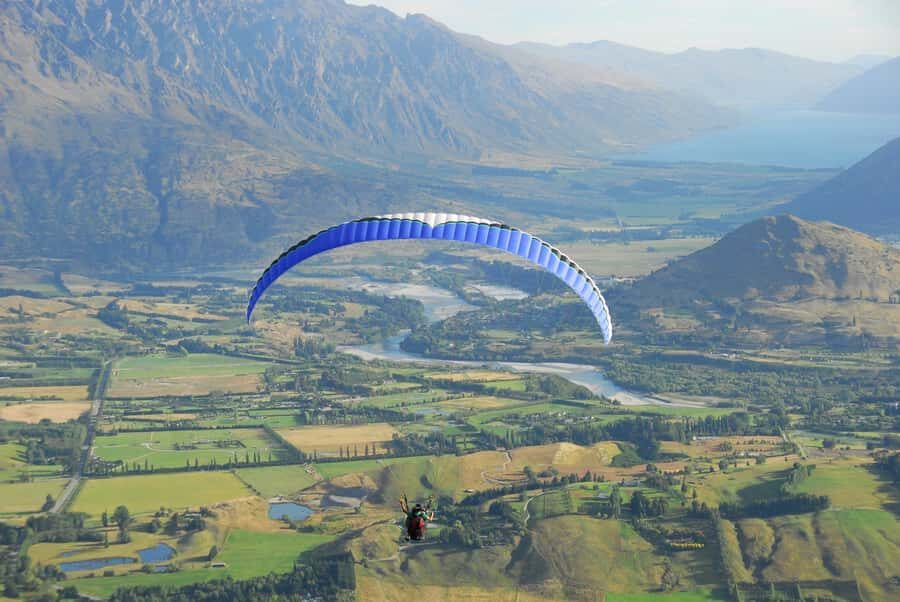
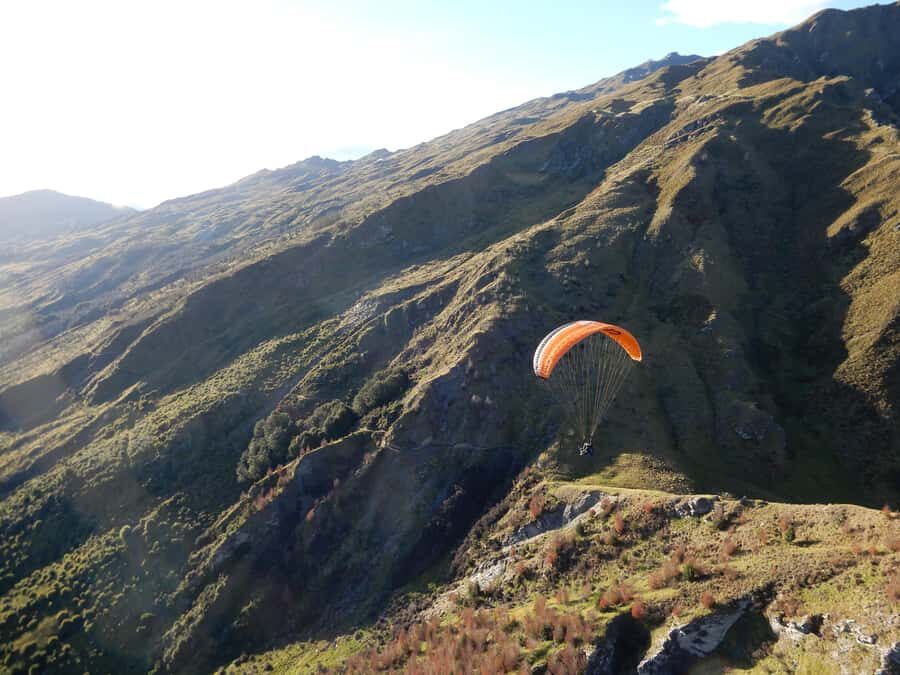
- The Flight Over the Wakatipu Valley: Views, Motion, and That Wind-in-Your-Hair Feeling
- Want Calm or Want Tricks?
- Smooth Check-In, No-Wait Flow, and Why Group Size Matters
- Price and Value Check: Is $208 Worth It?
- What to Wear: Cold Wind Is Real, Even in Summer
- Who Should Book This Tandem Paragliding Experience
- What to Ask Your Pilot (So You Get the Flight You Want)
- Should You Book Tandem Paragliding in Queenstown?
- FAQ
- Where is the meeting point for the tandem paragliding experience?
- How long does the activity take?
- Do I need paragliding experience?
- What are the key health or fitness limits?
- Is weather a factor?
- Are photos and videos included?
Key Points Before You Go
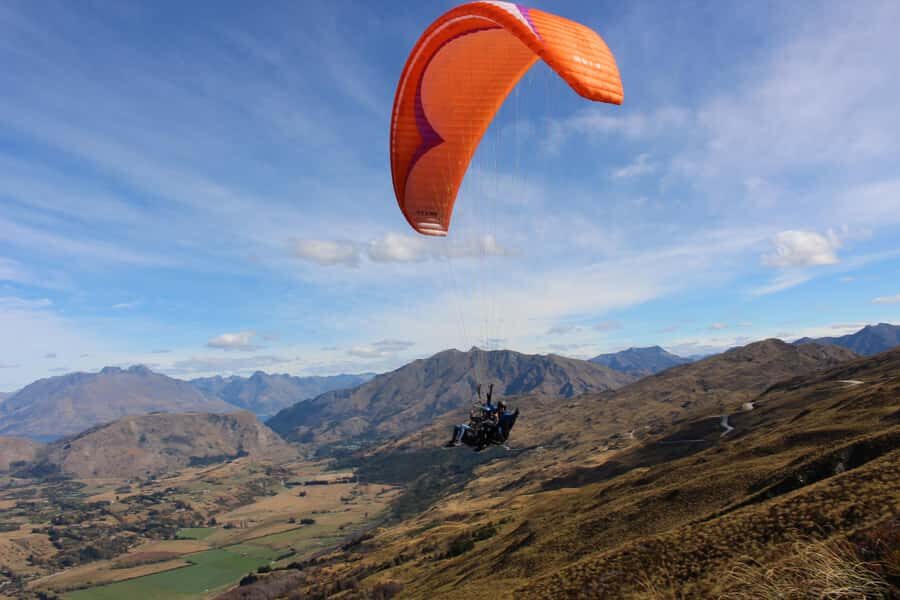
- Highest commercial take-off point in New Zealand: you’re launching from Coronet Peak, which matters for your first seconds in the air.
- Small groups (up to 7 people): it feels organized and personal rather than rushed.
- Safety briefing plus real coaching: you get instruction before you’re strapped in and launched.
- Air time is short, but the total day feels smooth: about 90 minutes overall, with flight often around 12–15 minutes.
- You can go calm or ask for tricks: some pilots offer simple mid-air fun if conditions allow.
- Transfers are included: van ride up and back from central Queenstown helps you avoid logistics headaches.
Why Coronet Peak Tandem Paragliding Feels Different Than Other Queenstown Thrills
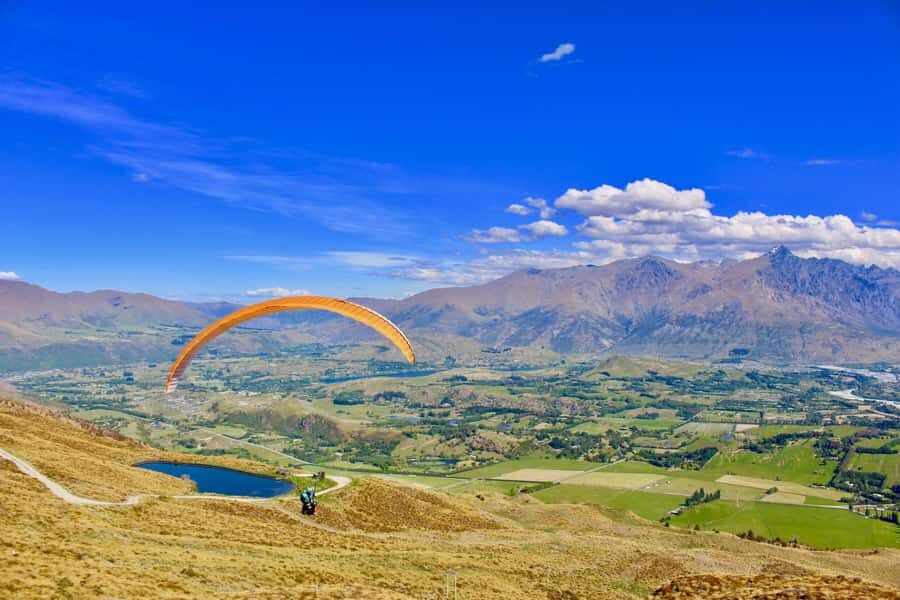
Queenstown sells adrenaline well, but tandem paragliding has a different rhythm. You still get the thrill of lift and motion, yet it’s calmer than you might expect because your pilot controls the flight path, speed, and timing.
The big selling point for me is the launch height. Going from the highest commercial take-off point in New Zealand means your first glide has momentum, and the view opens quickly. Once you’re above the valley, the mountains and river lines stop being “pretty on a map” and become real depth you can judge with your eyes.
Also, the experience is built for first-timers. You don’t need prior paragliding skills, because you’re tethered to your pilot the whole time. Your role is mostly to relax, hold on, and follow quick instructions.
Other Queenstown tours we've reviewed in Queenstown


Where You Start: Meeting at the Skytrek Desk in Queenstown
Your day begins in central Queenstown at the Skytrek desk inside the ground floor Ziptrek Shop (near 45 Camp Street). This is the moment you want to get your nerves out of the way, because once you’re checked in, the rest moves fast and clean.
The handoff is straightforward: you check in, get ready, and then you’re transported by van to the take-off area. I like this setup for two reasons: it keeps you from worrying about parking or finding Coronet Peak on your own, and it means you can stay focused on weather, clothing, and staying hydrated.
If you’re staying outside the very center, it may still be easy. One helpful example: if you’re based near Arthurs Point, you can ask Skytrek ahead about boarding the shuttle bus from the Arthurs Point Road area rather than driving into central Queenstown.
The Van Ride Timing: How the 90 Minutes Actually Works
The full experience is listed as 90 minutes, but that’s not only flight time. You’re spending part of the window on movement and preparation, which is normal for a safe, weather-managed outdoor activity.
Here’s how the pacing typically feels:
- A van ride up to Coronet Peak (about 20 minutes)
- A safety briefing (about 20 minutes)
- A guided prep segment at the launch area (about 20 minutes)
- Then the return van ride to Queenstown (about 20 minutes)
In the air, your paragliding time is often around 12–15 minutes. That difference is important. If you’re expecting a full movie-length flight, you’ll be surprised; if you’re expecting a quick, high-impact view from the sky, you’ll feel perfectly happy.
Coronet Peak Safety Briefing: The Part That Makes Everything Feel Easy
The safety briefing isn’t filler. It’s where you learn how to be a good passenger in a tandem harness, what to do with your body, and how your pilot communicates during the flight.
You also get a chance to ask questions before anything happens quickly. In practice, that calm instruction is what reduces the “what if?” feeling that stops some first-timers from enjoying the experience.
I’d pay special attention to three things during the briefing:
- How your pilot wants you to hold your harness and posture
- What you should do during take-off and landing moments
- How to signal comfort or ask for a calmer flight versus more playful flying
This part is also where you’ll likely feel the operator’s organization. People tend to leave reviews praising the smooth process, and you can see why: they don’t rush you into the air before you understand what’s next.
Getting Ready at the Launch Point: Harnesses, Wind, and Real-World Advice
Once you reach Coronet Peak, you’re not just waiting. You’re getting set up and reading wind conditions with your pilot.
This is where the “highly experienced pilot” language becomes practical. A skilled pilot isn’t only focused on flying; they’re watching air movement and choosing a path that keeps the ride smooth. Some flights also get a little longer when thermal winds cooperate, which is basically Queenstown weather doing its best work.
One reason I like tandem paragliding here is that conditions seem to affect the experience in a positive way. On the right day, you get more lift and a slightly longer glide. On a less cooperative day, you still get flight, just with a more conservative plan.
Your guided prep time is the moment to confirm how your pilot plans to fly. If you’re like me and prefer clarity over guessing, ask a simple question like whether today will be calmer or more active.
Other paragliding tours we've reviewed in Queenstown
The Flight Over the Wakatipu Valley: Views, Motion, and That Wind-in-Your-Hair Feeling
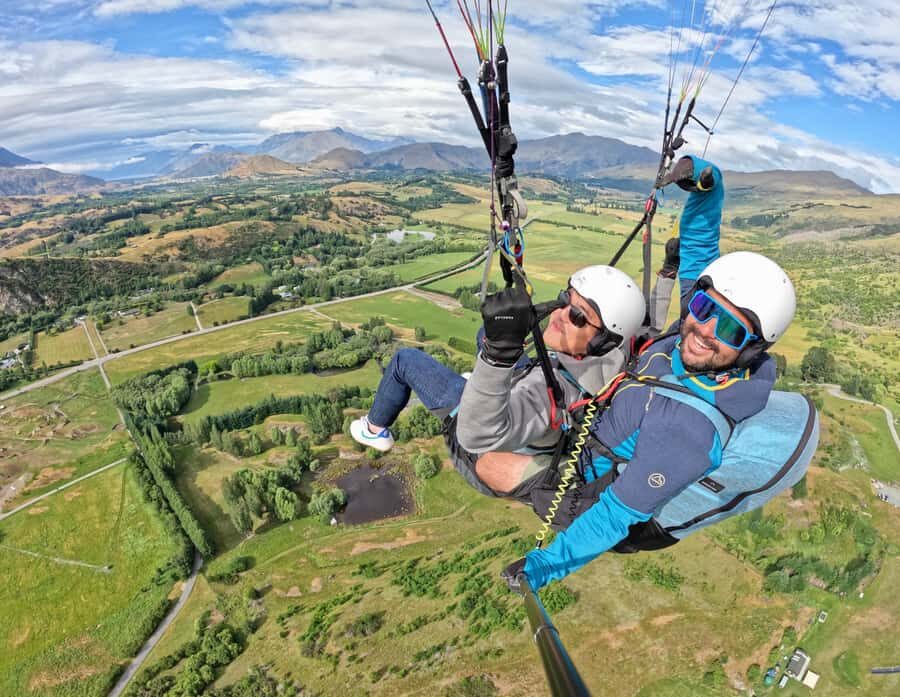
Then comes the best part: the moment you feel lift and realize you’re genuinely flying, not just swinging from a harness.
A common theme is how smooth take-off and landing feel. You’re guided through the key moments, and your pilot helps reduce the feeling of abrupt movement. Landing is particularly important because it’s the point where people usually think they’ll feel jolts. Here, many riders report it’s controlled and not harsh.
In the air, you’ll see:
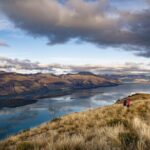
- The Wakatipu Valley below
- Surrounding mountains
- The broader Queenstown region from above
And yes, you’ll feel wind. One of the pleasures of paragliding is the sensation of air moving around you as you glide. It’s not like sitting in a plane seat where everything is filtered; your body reacts to temperature and airflow, so wind in your hair is a real thing.
Want Calm or Want Tricks?
One of the more fun notes from rider experiences is that you can often choose the vibe. Some pilots will let you keep it relaxed and scenic, while others will offer simple tricks if the conditions allow and you’re feeling brave.
If you want to steer this part of the experience, say it early. Tell your pilot you’re excited for the views, but ask what’s possible with today’s wind.
Smooth Check-In, No-Wait Flow, and Why Group Size Matters
This activity caps at 7 travellers. That limit shows up in how the day feels: there’s less time wasted in lines, fewer people competing for attention, and a smoother handoff from check-in to van to briefing.
Many riders mention the whole flow is efficient. That matches what I’d expect from a setup where everyone is moved and briefed together, rather than spread across a chaotic schedule.
The other quiet win is that transfers are included. You don’t need to figure out how to get yourself back from the landing area. When you’re spending your energy on breathing and watching the sky, the less you juggle logistics, the better.
Price and Value Check: Is $208 Worth It?
At $208 per person for about 90 minutes, this isn’t a “cheap adrenaline” option. But it also isn’t the most expensive way to play with fear and height in Queenstown. The value comes from what’s included and what you don’t have to supply yourself.
What you get for your money:
- Paragliding with an experienced pilot
- Transfers to Coronet Peak and back
- Safety briefing and guided flight experience
What costs extra:
- Photos and videos are not included, and an upgrade is commonly priced at 90 NZD
So is it worth it? For me, it depends on your travel style:
- If you love doing one signature Queenstown adventure that’s genuinely different from the ground, $208 feels fair because you’re buying a rare view plus pro handling.
- If you hate spending extra on photos, mentally plan to skip the upgrade or treat it like a splurge you only buy if you’re sure you’ll want the footage.
Also consider timing. Queenstown activities can be weather-dependent, and being able to rebook or refund if canceled is valuable. When you’re paying for outdoor flight, you don’t want uncertainty to turn into wasted money.
What to Wear: Cold Wind Is Real, Even in Summer
You’re flying in wind at altitude. Even if Queenstown feels mild on the street, the air at launch can feel chilly once you’re moving.
Based on practical advice people give after their flights, I’d pack:
- Fingerless gloves (many people recommend them)
- A warm layer like a light jacket
- Sunglasses and a beanie (yes, even on bright days)
- Comfortable clothes you can move in during the harness prep
Also think about motion. If you’re prone to motion sickness, the mix of wind, paragliding movement, and vehicle rides on the day can affect some people. A useful tip from experience is to consider motion-sickness help if that’s been an issue for you before. Even then, it’s smart to keep expectations realistic and focus on breathing and staying relaxed.
Who Should Book This Tandem Paragliding Experience
This is a great fit if you want:
- A first-time-friendly flight experience with no experience required
- A thrill that’s active but not the same physical stress as jumping or climbing
- Big sightseeing payoff over the Wakatipu Valley
It may not be the right fit if:
- You have no tolerance for outdoor wind and temperature shifts
- You have limitations related to the body and medical screening
The key eligibility points you should know:
- No heart problems or other serious medical conditions
- Most travellers can participate
- Not suitable for children under 4
- Weight limit is 264 lbs / 120 kg
What to Ask Your Pilot (So You Get the Flight You Want)
You’ll often have a chance to influence the vibe of your experience. I’d arrive with two simple priorities: safety and comfort. Then add fun.
Good questions to ask during the briefing or right before take-off:
- Can we keep things scenic and smooth, or is today set up for a few tricks?
- Is there anything you want me to do differently for comfort during take-off and landing?
- If I’m feeling nervous, what should I focus on in the first moments?
Many riders describe pilots checking in constantly during flight. That’s what you want: not a rigid script, but reassurance and guidance when it counts.
Should You Book Tandem Paragliding in Queenstown?
I think you should book this if you want a signature Queenstown view with a clear structure and expert control. The smooth take-off and landing, the small group size, and the fact that you don’t need experience make it a low-stress way to experience being airborne.
Skip it or reconsider if you know you’re highly sensitive to motion, you can’t handle cold wind, or your schedule can’t tolerate weather changes. If you’re okay with that reality, tandem paragliding from Coronet Peak is one of the cleanest “wow” experiences in the region.
If you do book, dress for wind, decide early whether you want a calm glide or optional playful flying, and plan your day so you’re rested before briefing time.
FAQ
Where is the meeting point for the tandem paragliding experience?
You meet at the Skytrek desk inside the ground floor Ziptrek Shop in Queenstown.
How long does the activity take?
The full experience is about 90 minutes, including travel by van, a safety briefing, and time at the launch area.
Do I need paragliding experience?
No experience is necessary. You fly tandem with a highly experienced pilot who guides you through the process.
What are the key health or fitness limits?
The experience is not suitable for people with heart problems or other serious medical conditions. There is also a weight limit of 264 lbs / 120 kg, and children must be 4 or older.
Is weather a factor?
Yes. The activity requires good weather. If it’s canceled due to poor weather, you’ll be offered a different date or a full refund.
Are photos and videos included?
Photos and videos are not included in the base price. An upgrade is available for an extra cost.